Reflections · April 16, 2026
Wood phase, a neighbor's treehouse on the West Side Trail, and what the bare branches let us see.
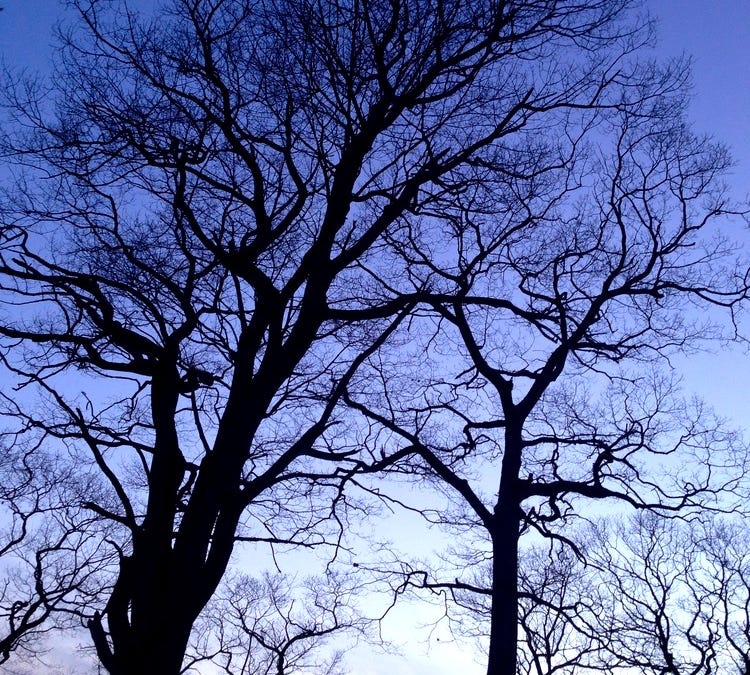
I spotted the treehouse on a morning run along the West Side Trail on Cousins Island. It belongs to a neighbor's child. I have passed it dozens of times in summer and barely registered it, hidden as it is by a full canopy of oak and maple. In April the leaves have not yet come in, and the structure sat plainly visible against the grey sky: plywood platform, a railing, a rope ladder. Nothing about it had changed. The branches had simply not yet filled in enough to hide it.
When I was young, my father built treehouses for my brothers and sisters and me. He was a family physician for nearly fifty years, and on weekends he worked with his hands: lumber, tools, the physical work of building something a child could climb. There is a photograph of all ten of us lined up in the treehouse, taken from below, arranged along the railing. We used it for the Christmas card that year. I remember the plywood floor, the way it smelled like sawdust and rain. I would climb up with a book and sit with the birds in the branches around me, each one calling in patterns that no human, at any age, has fully translated.
A treehouse is made from the tree it holds onto. The material and the anchor are the same.
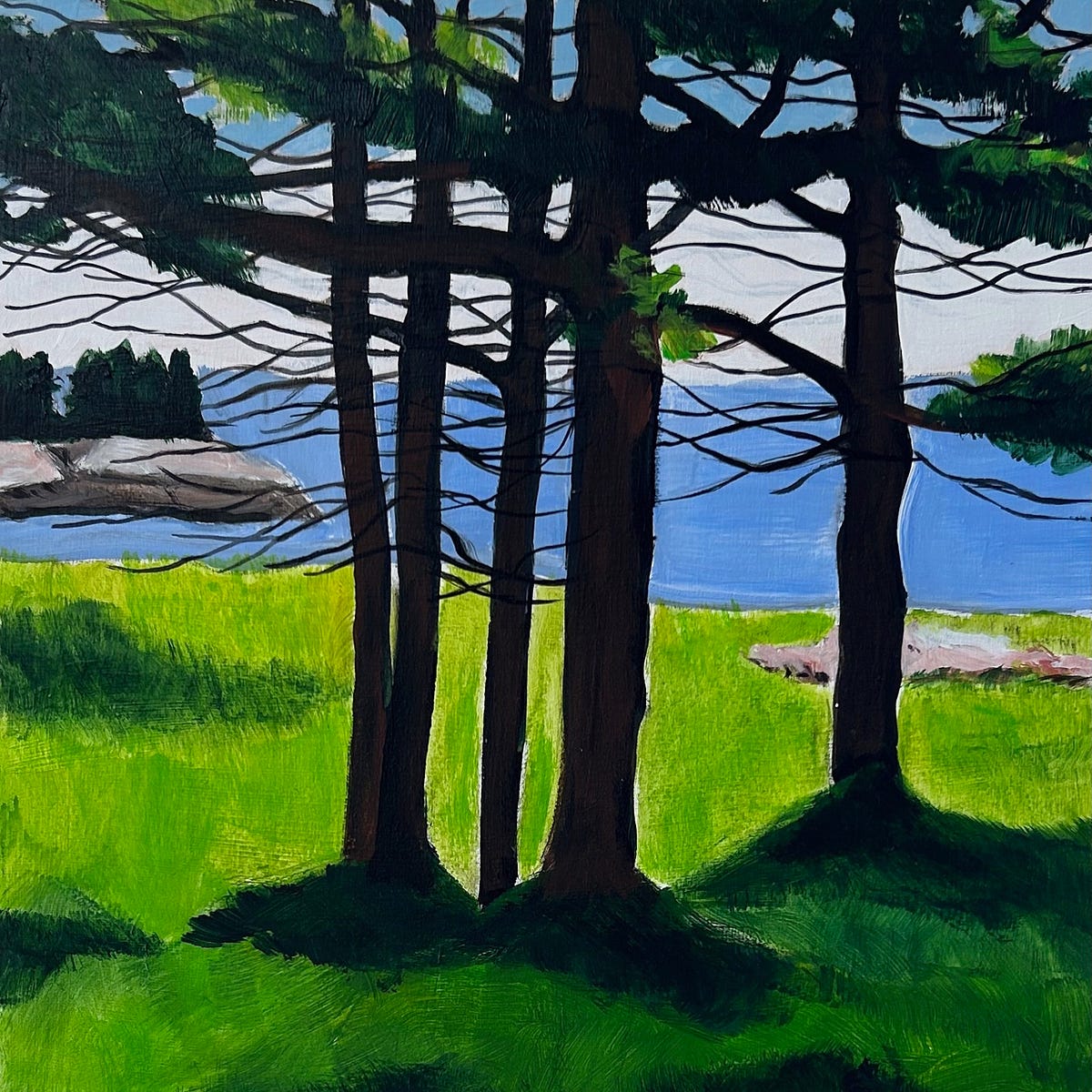
In Chinese medicine, spring belongs to the Wood element. Wood governs growth, vision, the capacity to push upward and outward after months of stillness. It is the energy of a plan forming, a shoot pressing through cold soil, a branch extending toward light it has not yet reached.
The trouble with Wood is not growth itself. The trouble is rigidity.
I used to tell my patients a version of this: picture a tree in a hurricane. A tree of moderate size, rooted well, with enough flexibility in its trunk to move with the wind, will hold its ground. The storm passes. The tree is still standing. A tree that has grown too large or too hardened, too fixed in its own architecture, may snap in half. The break happens not because the storm is stronger than the tree, but because the tree has lost the capacity to bend.
We carry this in our bodies. In the muscles along the sides of the ribs, in the tendons of the hips, in the jaw we clench without noticing. The Wood element, when it flows, gives us direction and the steady force that moves a season forward. When it stagnates, we feel stuck, irritable, brittle in places we used to bend.
The Bountiful Path Spring Seasonal Reflection was built around this idea. The Wood phase invites us to notice where we are growing freely and where we have stiffened. Where we are reaching toward something new and where we are gripping what no longer serves. The toolkit walks through this in detail, one question at a time, because the body often knows before the mind does.
Growth is not the problem. Hardening is.
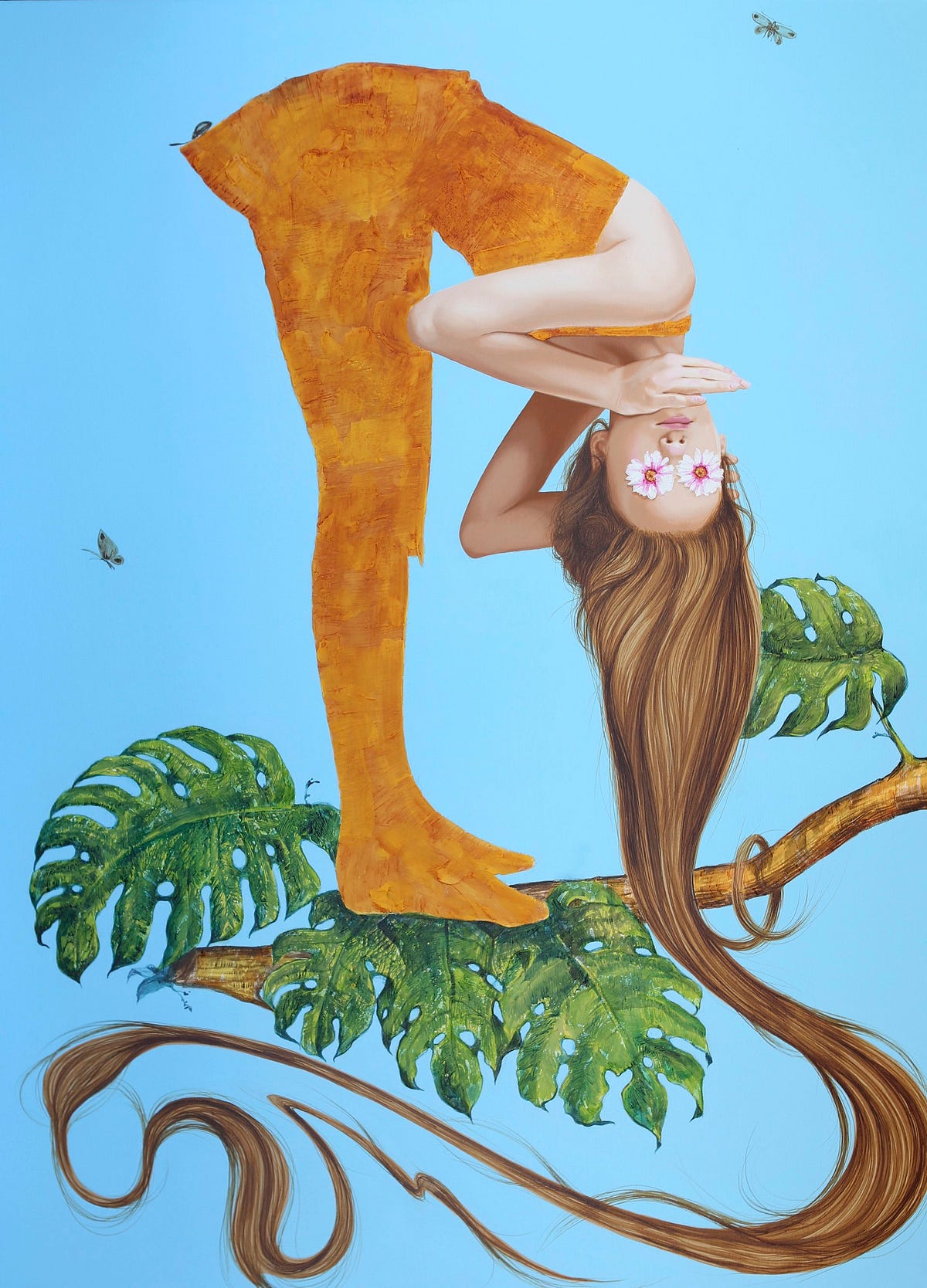
A tree, of course, does more than grow. It is rooted in soil and reaches toward open sky. It interacts with every element in the natural world: the water that feeds it, the fire of sunlight that drives its chemistry, the earth that holds it, the metal of minerals drawn up through its roots. It is home to birds, insects, squirrels, the occasional child with a book. It is also the place where humans climb to see things differently.
During one of our Artful Escapes events, one of the presenters chose to share photographs from a place filled with treehouses. He and his partner had stayed in one overnight. The images showed structures suspended in a canopy, lit from within, connected by walkways that swayed. Adults who have built entire professional lives, who keep calendars and manage obligations, will travel across the world to sleep in trees.
The plywood floor. The shift in perspective when the ground drops away by ten or twelve feet and the familiar landscape rearranges. The sound of wind in branches without a wall between you and it. We go back to this. We go a long way to go back to this.
We travel to distant places to stay in houses that return us to where we started.
On Cousins Island in April, the buds are swelling on the oaks. They are not yet open. The treehouse I passed on my run will disappear again once the canopy fills in, folded into green, invisible from the trail. For now, in this particular window of the season, the bare branches have made it plain.
The spring that arrived in Virginia as dogwood and cherry blossoms is still working its way north. The ground is soft. The light is longer. The Wood element is doing what it does: pressing upward, reaching outward, testing flexibility as it goes.
My father, who built the treehouse that held ten children and a Christmas card, understood this. He spent his weekdays listening to patients and his weekends building things with his hands. He knew that the strongest structures are the ones that give a little. That roots matter more than height. That sometimes the best use of a Saturday is to build a platform twelve feet off the ground and let your children see the world from there.
Like Shel Silverstein's tree, the gift is in the offering. Wood gives itself away and remains standing.
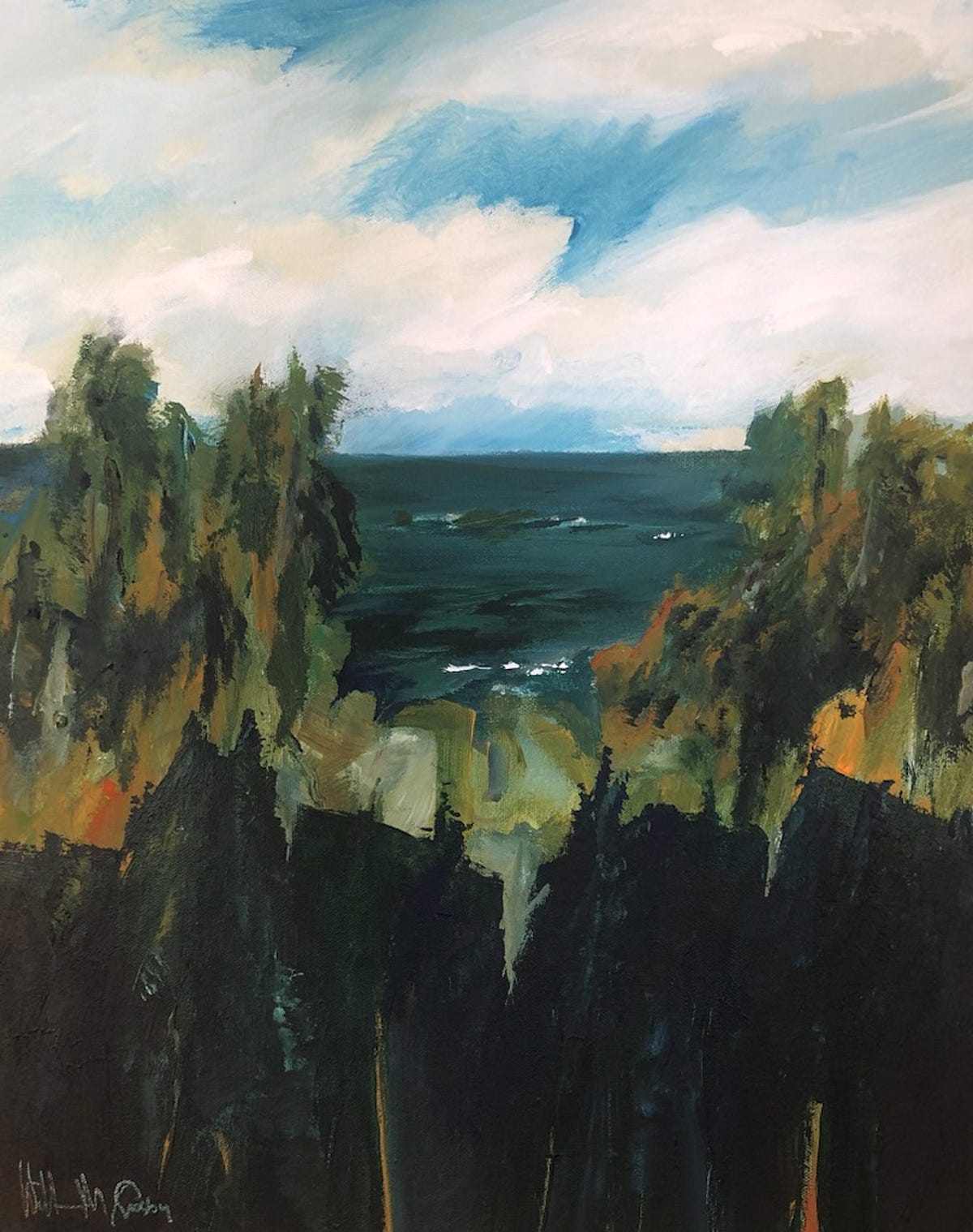
The best view is earned by climbing. The safest perch is the one that sways.
Pause + Reflect: What did you see differently from up high as a child, and where do you go now when you need that shift in perspective?
The treehouse on the West Side Trail is still visible in the bare branches. The leaves will come. The canopy will close. In the meantime, the structure sits in plain sight, waiting for the child who knows the way up.
© 2026 Dr. Lisa Belisle. All rights reserved.
May we grow without hardening. May we keep climbing to see the familiar from a new height. May we build platforms for the people who come after us, and trust that the branches will hold.