Reflections · May 18, 2026
When the calendar says summer and the magnolias say not yet.
A reflection on Lìxià, the Chinese beginning of summer that arrives when Maine is just reaching the peak of spring. On photoperiodism and biological timekeeping. On Pastoureau's color of emergence, and the in-between of our own identities.
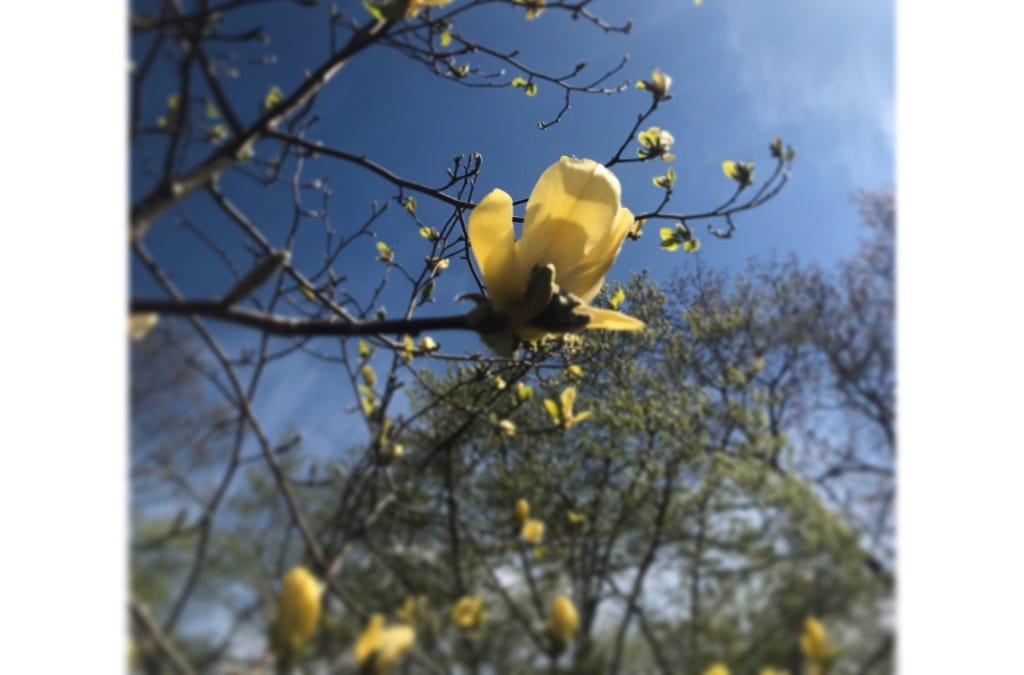
Yellow magnolia beneath a May sky: some blooms arrive softly, carrying the first true warmth of the season with them.
While traveling through Portland a few weeks ago, I noticed an entire city block lined with crabapple trees in bloom. Meanwhile, on Littlejohn Island, magnolias were beginning to unfurl. Portland and Littlejohn Island are less than an hour from one another, whether by car or by boat. I continue to be fascinated by the microclimates we may not even recognize, and how they impact us.
Even within Maine, one landscape may already be leaning toward summer while another still lingers in the tenderness of spring.
Of course, other parts of the world have been living in that seasonal transition for weeks already.
We've mentioned seasonal frameworks before, and how they differ across cultures. Lìxià, the beginning of summer in the Chinese lunisolar calendar, happened at the beginning of May. This is significant in Chinese medicine. Yang (active and dynamic energy), which has been steadily rising through the Wood season of Spring, begins to crest as we move into summer. Yin (passive and receptive energy) begins its subtle decline.
Western biology has names for both responses: photoperiodism in the trees, biological timekeeping in us. The body, like the magnolia, reads the lengthening day. It is light, not the calendar, that tunes our circadian rhythms: melatonin rising in the evening, cortisol surging in the morning, body temperature swinging through the day.
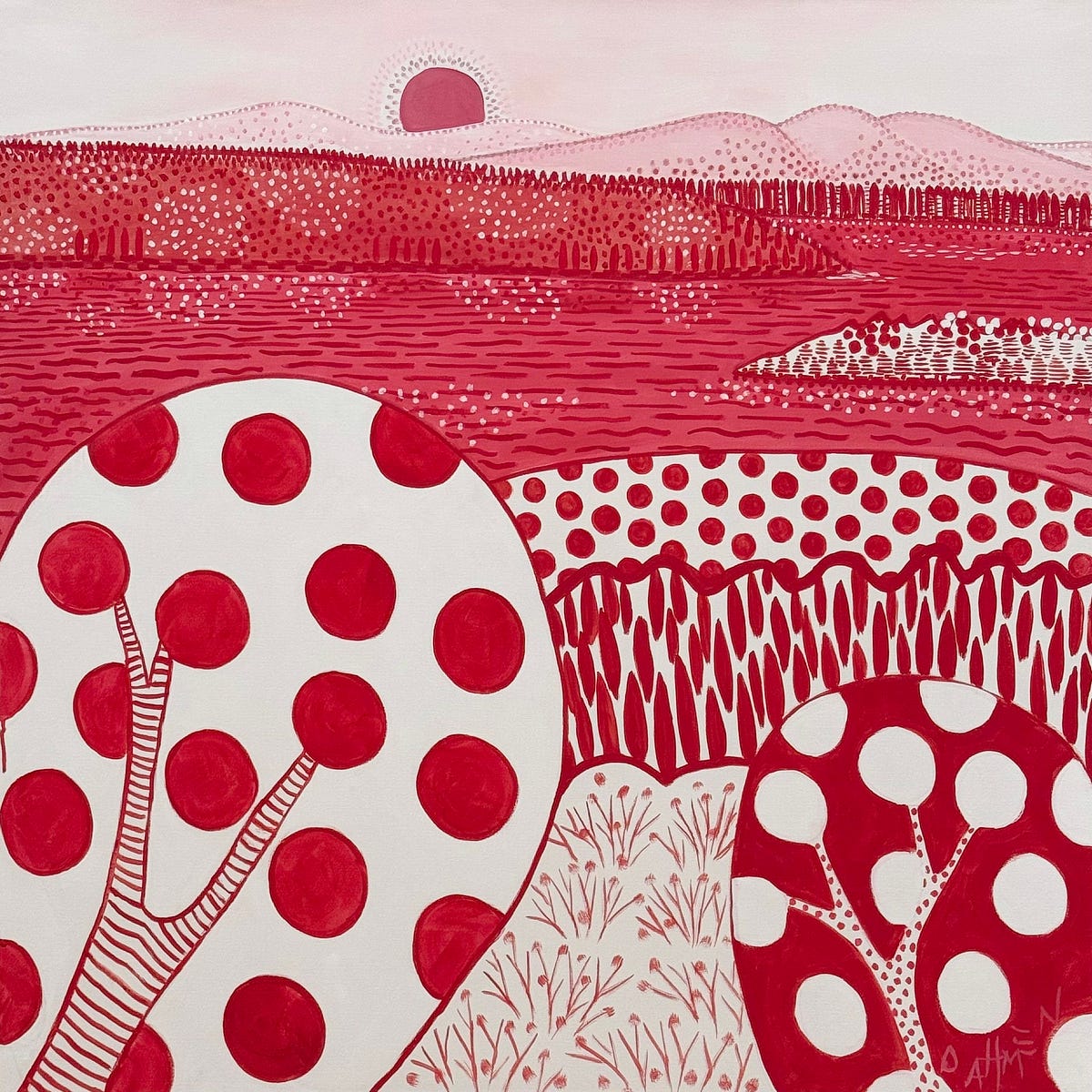
In contrast to Spring's season of growing Wood, Summer's season of expanding Fire asks us to move outward: to connect, create, circulate, and celebrate. It also asks us to protect what nourishes us internally. In Chinese medicine, summer belongs to the color red, and to the Heart: the organ associated not only with circulation, but also consciousness, spirit, and joy.
The body, like the magnolia, reads the lengthening day.
Given all the cultural and economic changes of the past few years, many people are moving across their own thresholds of becoming.
As people and as a culture, we are not entirely who we once were.
We are not yet fully who we are becoming.
I've been reading historian Michel Pastoureau's book Black: The History of a Color, which explores how societies have used color not merely decoratively, but socially and symbolically. Pastoureau writes about the long debate over whether black is truly a color or the absence of color. This distinction depends on whether we are speaking scientifically, artistically, or metaphorically.
I won't take a stand on that here.
I was more interested in his observation that color became increasingly important as the world expanded and societies grew more complex. Color helped establish belonging. It identified allegiances, professions, loyalties, and communities.
This is still true of work and school uniforms, the colors of our favorite sports team, and our country's flag.
Leadership research and sociology continue to affirm that humans have an intrinsic need to gather with one another. Especially in uncertain times, people seek signals that help them recognize their "in-group," the communities where they feel protected and connected.
In medieval literature, black often represented the disguise of transition. A knight dressed entirely in black was frequently someone moving between identities.
Pastoureau describes how, in Walter Scott's Ivanhoe, the mysterious Black Knight is eventually revealed to be King Richard the Lionheart, who has returned from captivity after years away. The black armor was a necessary in-between state: a passage between who he had been and who he would become again.
Black, in this sense, became the color of emergence: of someone returning to themselves.
There are seasons in leadership, medicine, creativity, parenting, and simply being human, when we no longer fit into the identity we once wore. Still, we are not yet ready to accept the next mantle of self. A companion reflection on walking transitions on purpose explored that territory.
Those moments can feel disorienting. Perhaps they are also sacred and deserving of protective armor.
Nature certainly treats them that way.
The magnolia buds remain tightly encased in thick, fuzzy scales, awaiting the right time to bloom.
Each unfolds at its own pace and in its own readiness for light.
Perhaps we are meant to do the same.
The more experiences we have, the more we may understand that identity is less fixed than seasonal. We circle through versions of ourselves repeatedly: healer, learner, parent, artist, leader, beginner.
Each return asks us for something slightly different.
We often imagine change as dramatic and obvious. More often, change begins quietly: in what we notice, and what calls for more tenderness or courage.
Often, we are not lost. We are simply between seasons.
Pause + Reflect: What color is your life wearing right now, and how does it reflect the season you are in?
As Lìxià arrives by the Chinese calendar, and Maine still answers in magnolias, I find myself thinking about the wisdom of tending both Fire and Wood, ambition and restoration, visibility and inwardness, movement and reflection.
The real work of sustainable leadership and meaningful living is learning how to move gracefully through seasons of becoming.
The magnolias will bloom when they are ready, and so will we.
Until then…
May we honor the in-between as its own kind of home. May we let ambition and restoration share the same breath. May we bloom when the light asks us to, not before.